AI and the 2025 Hiring Freeze

Standard


2025 Hiring Freeze

In 2025, several prominent tech companies, including Salesforce, Microsoft, and Meta, have implemented hiring freezes and workforce reductions, primarily influenced by advancements in artificial intelligence (AI). These measures reflect a broader industry trend toward automation and efficiency.

Salesforce’s Strategic Shift

Salesforce CEO announced that the company might not hire any new software engineers in 2025. This decision stems from significant productivity gains achieved through AI agents working alongside engineers. Benioff stated, “We have seen such incredible productivity gains because of the agents that work side by side with our engineers.”

Furthermore, Salesforce is reportedly planning to cut around 1,000 roles while hiring sales staff to bolster its AI initiatives. This move aligns with the company’s strategy to integrate AI into its operations, aiming to enhance efficiency and reduce costs.

Salesforce’s actions are part of a larger pattern within the tech industry. Companies like Google and Meta are also adopting AI to streamline operations. Google CEO Sundar Pichai revealed that AI now writes over 25% of new code at Google, significantly reducing human coding work. Meta CEO Mark Zuckerberg has stated that AI could soon replace midlevel software engineers, roles that typically command six-figure salaries.

This trend is raising concerns about a “white-collar recession” in 2025, as AI-driven automation may accelerate job displacement in the tech sector. Industry analysts warn that AI’s growing role could contribute to significant job losses among software engineers and related professionals.

Broader Impact Across Industries

The influence of AI extends beyond tech companies. In 2025, multiple major companies across various industries have announced layoffs. As much as 41% of global companies are planning workforce reductions over the next five years due to AI advancements. Notable companies implementing job cuts include Adidas, Ally Bank, BlackRock, and Wayfair.


41% of surveyed employers forsee staff reductions due to skills obsolescence

Future of Jobs, World Economic Forum

The integration of AI into business operations is reshaping the employment landscape, particularly in the tech industry. Companies like Salesforce, Microsoft, and Meta are leveraging AI to enhance productivity, leading to hiring freezes and workforce reductions. AI offers significant efficiency gains. However, it also poses challenges for employment. Businesses must reevaluate workforce strategies. New skill sets are needed to adapt to the evolving job market.

Realization and Justification

As AI continues to automate coding and software development tasks, companies and managers will use several narratives to justify hiring freezes and the reduction of software developers.

Continue reading
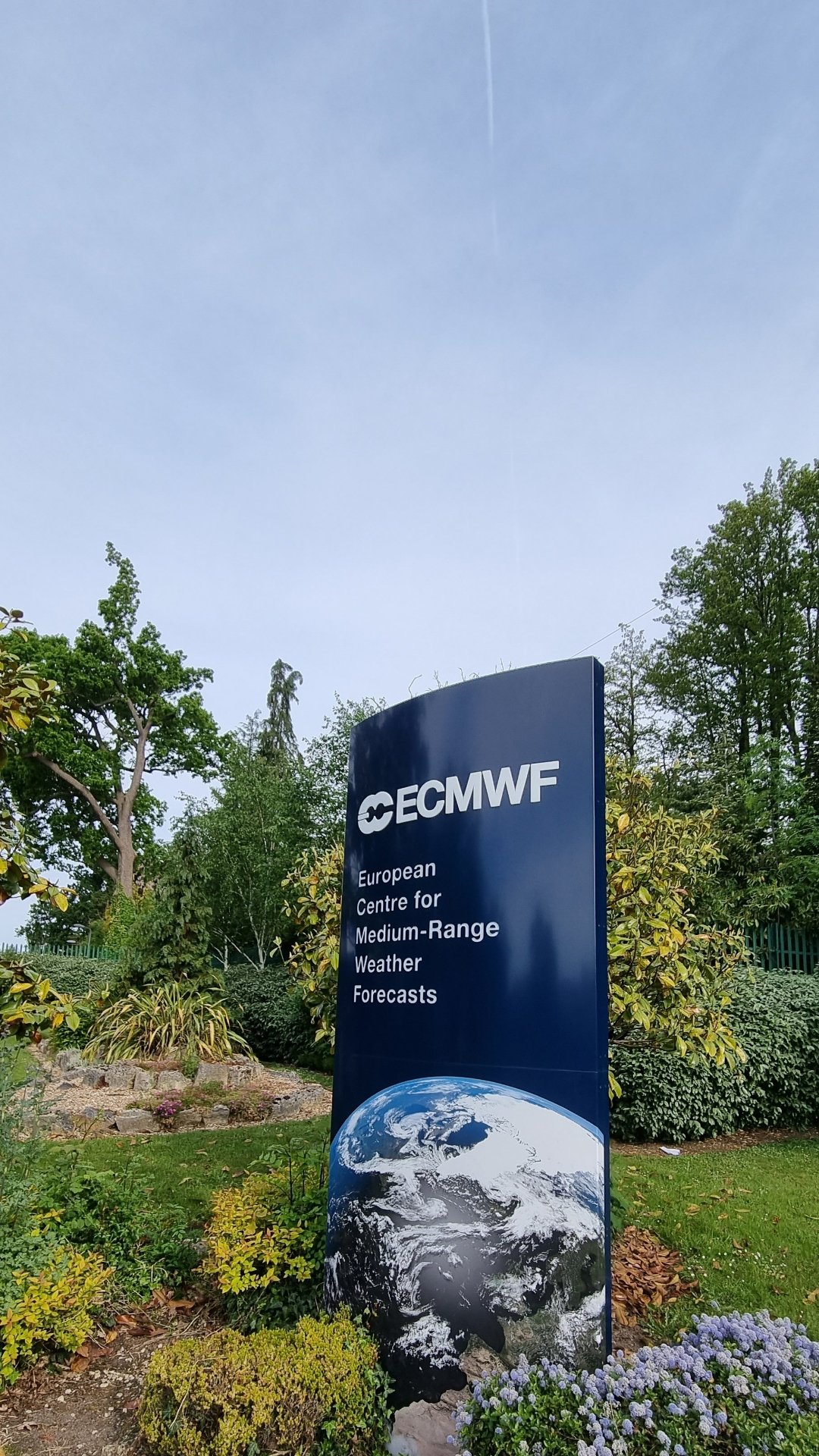
Attending the ECMWF training course on Data Assimilation

Standard

Satellite Missions for Atmospheric Composition and Air Quality Monitoring

Standard

Earth’s system is a coupled system where the different components (the atmosphere, the hydrosphere, the lithosphere, and the croyosphre) are constantly interacting at different spatial and time scales.

Atmospheric composition and thus air quality (what impacts human health as well as other lifeforms inluding agriculture) is a hot topic and active area of research. When it comes to air quality, measurements of pollutant concentrations like particulate matter and trace gases is not new and continues to develop and expand as technology keeps improving and measurement networks keeps growing.

However, like in atmospheric science and hydrology point based measurements can only do so much. For example, determining the water level or water speed at a point along a river stream requires an understanding of the surface elevation (known bathymetry when under water) and whether the point of interest is upstream or downstream the river. Similarly, how the concentration of a pollutant evolves is governed by the underlying driving forces most notably the wind field, the pollutant lifetime, and the nature of the chemical interactions that arise.

It is therefore critical that the evolution of different chemical elements (pollutants if they affect human life) are tracked and studied in detail. Some of the questions science is trying to answer when it comes to air quality include:

  • What are the spatial and temporal variations of the concentrations of pollutants?
  • How are local and regional air quality affected by long-range transport?
  • How does air quality and climate change drive each other?
  • How is air quality affected by metrology and how are pollutants dispersed by weather?
  • How can fluxes between different regions be quantified or estimated?

For these and other questions to be answered monitoring is required at the appropriate scale and temporal frequency of the underlying phenomena. Here then the role of satellite-based monitoring comes into play. A number of organisations have teamed up towards the same goal of making this monitoring a reality. A “virtual” constellation of satellites will be composed of three missions that will monitor air quality from space at unprecedented quality.

Continue reading

Quality results from focus and rigorousness

Quote

“Quality comes from focus and clarity of purpose, it comes from careful design and rigorous practices.” – Mark Shuttleworth:

Waterpixels and Watervoxels

Standard

Waterpixel

  • approach to simplify (large) images
  • is the reduction of the number of pixels (a.k.a image combinatorics) without the alteration of either of
    • pixel values (a.k.a spectral information or signature)
    • pixel organization (a.k.a pixel topology)
  • Practically it is difficult to satisfy the three constraints of
    • image size reduction
    • information preservation
    • structure non-alteration
  • Several superpixel paradigms exist:
    • waterpixels
      • an alternative to superpixel paradigms
      • are based on the watershed transformation
    • SLIC, Simple Linear Iterative Clustering
      • generates superpixels using k-means clustering

Watervoxel

  • Cettour-Janet et al. 2019 (link) outlines their work on Watervoxels,
  • is an n-dimensional extension of the waterpixels, as defined in the article

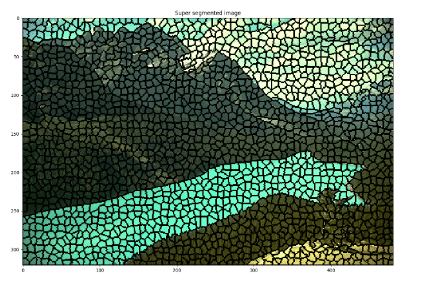
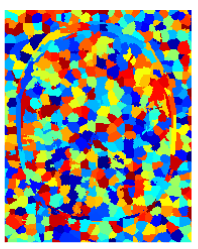
The images below summarize the result of the application of watervoxels to a 2D image and a 3D MRI image.

Result of the watervoxel on the 2D image
Result of the watervoxel on the 3D MRI image

What are your thoughts on watervoxels? How do you make use of them in your field?

References

Pierre Cettour-Janet, Clément Cazorla, Vaia Machairas, Quentin Delannoy, Nathalie Bednarek, François Rousseau, Etienne Décencière, and Nicolas Passat, Watervoxels, Image Processing On Line, 9 (2019), pp. 317–328. https://doi.org/10.5201/ipol.2019.250

R. Achanta, A. Shaji, K. Smith, A. Lucchi, P. Fua and S. Süsstrunk, “SLIC Superpixels Compared to State-of-the-Art Superpixel Methods,” in IEEE Transactions on Pattern Analysis and Machine Intelligence, vol. 34, no. 11, pp. 2274-2282, Nov. 2012, doi: 10.1109/TPAMI.2012.120.